INVENTORY · EXPERT PERSPECTIVE
High inventory, yet stores are out of stock: what should you review?
The question behind a familiar problem
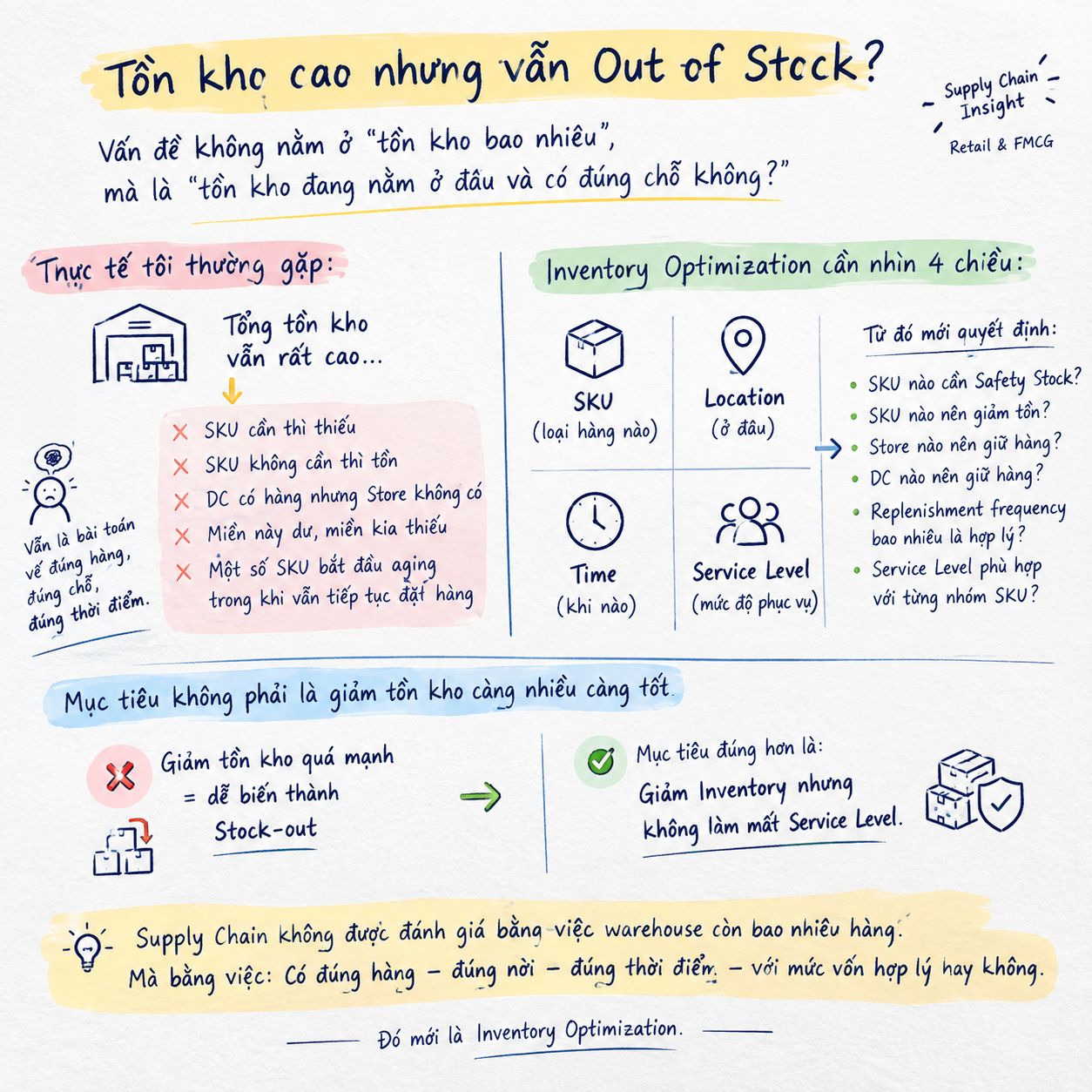
“Why is inventory so high while Sales keeps reporting shortages?” This is a question I often encounter in supply chain work and SME consulting.
Total inventory does not tell the whole story
It sounds contradictory, yet the situation is familiar in retail. Overall stock is not low. At SKU and location level, however, the picture can be very different: needed items are short while less-needed items accumulate; the central warehouse has stock but stores do not; one region has excess while another has a shortage; and some products slow down while purchasing continues. The question is not only how much inventory exists, but where it sits and whether it is in the right place.
Look at inventory across four dimensions
In my experience, retail inventory optimization should consider more than total stock ratios or inventory days. Examine SKU × Location × Time × Service level together. The same item may sell at different rates and follow different delivery schedules in each store. This supports specific decisions: which items need safety stock, which should carry less, whether stock should sit at a store or central warehouse, how frequently to replenish, and which service level suits each SKU group.
Reduce stock while protecting sales availability
I do not favor reducing inventory as far as possible. Cutting too aggressively can move a business from excess stock to shortages. The objective is to reduce inventory while protecting the agreed service level: the right product, in the right place, at the right time, with reasonable working capital.
Where to begin
If you run a retail chain, ask whether store shortages or slow-moving inventory is creating the greater pressure. Then review the four dimensions together rather than relying on one total.
English translation/adaptation of the Vietnamese article. Read the author’s original LinkedIn post ↗